
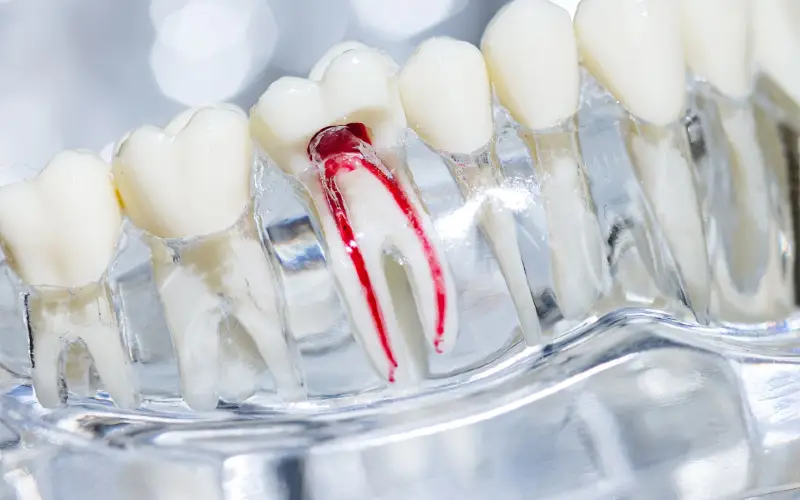
What is root canal treatment?
Root canal treatment is a gentle procedure that saves a severely infected or damaged tooth, preventing the need for extraction. The dentist removes the inflamed pulp from inside the tooth, cleans and disinfects the root canals, then seals them with a special filling. Finally, a crown is placed to restore strength and appearance.
Contrary to popular belief, modern root canal treatment is no more uncomfortable than having a standard filling, it simply relieves pain and protects your natural smile for years to come.
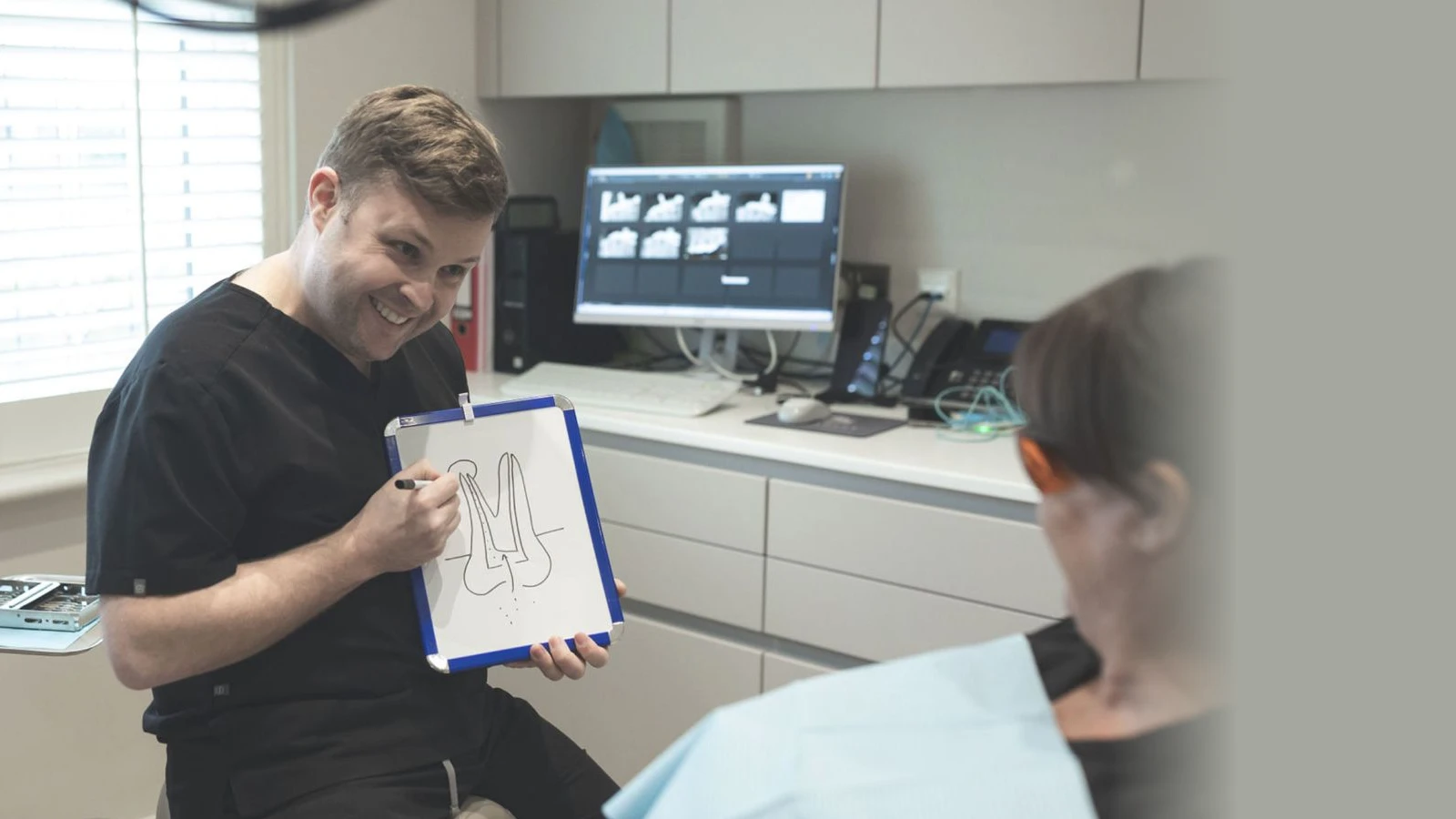
When root canal treatment may be needed
Root canal treatment directly addresses the causes of persistent toothache, deep infection, and dental abscesses. It relieves pain immediately by removing the inflamed nerve tissue and eliminating bacteria.
More importantly, it allows you to keep your natural tooth, preserving your bite function and preventing neighbouring teeth from drifting out of alignment.
Without treatment, the infection can spread, leading to swelling, bone loss, or even systemic illness.
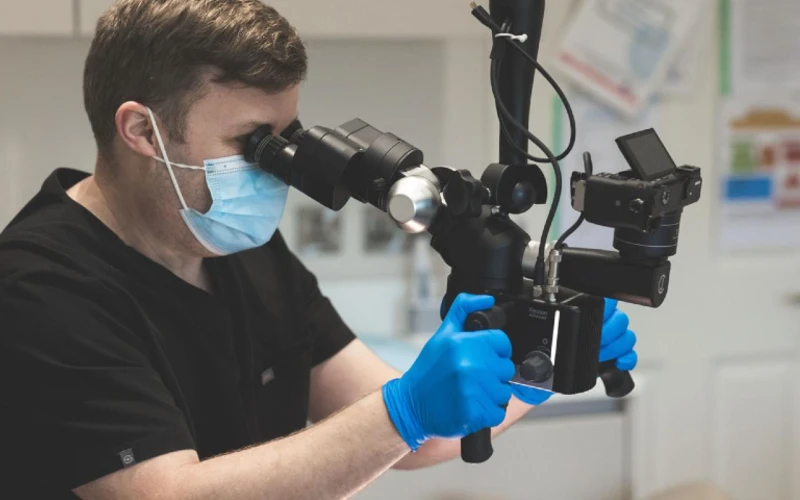
Your root canal treatment at The Abbey
Your root canal treatment begins with a local anaesthetic to numb the area completely, so you’ll feel no pain, just some pressure.
The dentist creates a small opening in the tooth to access the infected pulp, carefully removes it, then cleans and disinfects the root canals. The space is filled with a special material and sealed. You may need 1–3 visits depending on complexity. A crown is usually placed afterwards to protect your tooth.
Some mild tenderness is normal for a few days, but most patients find the procedure surprisingly comfortable and straightforward.
FAQs
What is a root canal treatment, and why is it a tooth-saving procedure?
A root canal treatment is the process of removing infected or dead nerve tissue from inside your tooth, then cleaning, disinfecting, and sealing the root canals. Far from being a tooth removal, root canal treatment is the ultimate tooth-saving procedure. Without it, the only alternative is extraction. By keeping your natural tooth, you avoid the need for a bridge, implant, or partial denture. At Abbey by Duthie Dental, we specialise in saving teeth that other practices may simply extract.
I've heard root canals are painful. Is that true with specialist treatment?
That is an outdated myth. With modern anaesthetics and specialist techniques, a root canal is no more painful than having a filling. The procedure itself is pain-free. What causes pain is the infection inside your tooth before treatment. Root canal treatment actually stops that pain by removing the source of infection. Many of our Liverpool private patients tell us afterwards: "I was terrified for nothing." Our focus on gentle, effective technique makes all the difference.
How much does a root canal treatment cost at Abbey by Duthie Dental in Liverpool?
Root canal pricing depends on which tooth is being treated, as different teeth have different numbers of canals. For full pricing details across all tooth types, including incisors, premolars, and complex molars, please visit our Prices and Payment Plans page. We believe in complete transparency and provide a fixed written quote for your specific tooth before any treatment begins, with no hidden charges.
I'm a new private patient. Do I need a referral for root canal treatment?
No referral is needed. You can book directly with us for an emergency assessment or a routine examination. If we confirm that you need a root canal, we can often begin treatment on the same day or within days, not weeks. Unlike many Liverpool practices that refer complex root canals elsewhere, we perform them in-house. Call us on 0151 707 4950 or email patientliaison@theabbey.dental to book an urgent assessment.
Can't I just have the tooth extracted instead? It seems easier
You can, but extraction should always be the last resort. Once a tooth is removed, the neighbouring teeth will drift into the gap, your opposing tooth may over-erupt, and you risk bone loss in your jaw. Replacing an extracted tooth with an implant or bridge is almost always more expensive and more time-consuming than saving your natural tooth with a root canal. Keeping your own tooth is biologically superior. We only recommend extraction when a tooth is truly unsalvageable.
What makes your root canal treatment different or more effective?
We focus on specialist-level technique even when performed by our general dentists. This means using dental dams for complete isolation, operating microscopes or high-powered loupes with fibre-optic lighting, and using advanced irrigation solutions to disinfect every canal. We take our time. Many failed root canals fail because the dentist missed a canal or did not clean thoroughly enough. We do not cut corners because we want your tooth to last for decades, not months.
How long does a root canal appointment take?
Simpler teeth such as front incisors take 45 to 60 minutes. Premolars take 60 to 75 minutes. Molars with multiple canals take 75 to 90 minutes. For teeth with active abscesses or complex anatomy, we may split treatment over two appointments. The first appointment removes the infected nerve and places a temporary medication. The second appointment completes the cleaning and sealing. This staged approach improves success rates for difficult cases.
Will I need a crown after my root canal treatment?
In most cases, yes. A tooth that has had a root canal becomes more brittle over time because it no longer has a living blood supply. A back tooth, in particular, is at risk of fracturing if only restored with a filling. We usually recommend a dental crown to protect the tooth from splitting. A front tooth with a small access hole may only need a filling. We will advise you honestly based on your specific tooth and your bite forces.
What is the success rate for root canal treatment at Abbey by Duthie Dental?
Our success rate for initial root canal treatment is over 90% when followed by a proper crown. Success means the tooth is pain-free, has no infection on follow-up X-rays, and remains functional in your mouth. Failed root canals are usually due to missed canals, incomplete cleaning, or cracks in the tooth that were not visible at the start. If a tooth fails despite our best efforts, we will discuss your options, including retreatment or referral to a specialist endodontist.
Can a tooth that has already had a root canal be retreated?
Yes. If a previously treated tooth becomes re-infected, we can often perform a root canal retreatment. This involves removing the old filling material, re-cleaning the canals, and sealing them again. Retreatment is more complex than initial treatment and has a slightly lower success rate, but it is still preferable to extraction in many cases. We will always explain the chances of success before you commit to retreatment.
What happens if I delay or avoid root canal treatment?
An infected tooth will not heal on its own. The infection can spread from the tooth into the surrounding bone, causing an abscess which is a pocket of pus. From there, infection can spread to your jaw, face, or neck, and in rare cases, to your bloodstream, which is a medical emergency called sepsis. You may also develop a sinus infection or facial swelling. The longer you wait, the more bone you may lose around the tooth, making extraction more likely. Treating early saves the tooth and saves you from more invasive procedures.
Book a private dental appointment
Connect with our team today to discover how a tailored treatment plan can transform your smile and your confidence.